Are you tired of watching a stock skyrocket 20% while you're sitting on the sidelines?
Do you feel like every time you finally hit "buy," the stock immediately turns around and punches you in the face?
I've been there. It sucks.
Most people think day trading is about being a genius or having a crystal ball. It’s not.
It’s about math, speed, and finding the right "wave" before it crashes.
Disclaimer: This is not financial advice. I am not your financial advisor. Trading involves significant risk, and most people lose money. Only trade with money you can afford to lose.
The Problem: Why You’re Losing Money Right Now
Most beginners lose because they trade "boring" stocks.
They buy a stock that’s moving sideways, hoping it goes up. It doesn’t.
Or they chase a stock that has already moved 50%. They buy at the top.
The secret isn't finding a stock that might move. It's finding a stock that is already moving and has the fuel to keep going.
That fuel is what we call momentum.
What is Momentum Trading, Really?
Momentum trading is simple: You buy things that are going up, and you sell them before they stop going up.
We don't care about the "value" of the company. We don't care if they make a good product.
We care about the price action and the volume.
Think of it like a train. If a train is moving at 100 mph, it’s not going to stop instantly. It has momentum.
Your job is to hop on for a few miles and hop off before the brakes hit.
How Momentum Traders Find Stocks (Day Trading Strategy): The Scanner
You can't manually check 5,000 stocks every morning. You’ll go blind.
You need a scanner. This is your "filter" that throws away the trash and gives you the gold.
Here is the exact criteria I look for:
•Float under 100 million shares: Float is the number of shares available to trade. If the supply is low and demand is high, the price moves fast.
•Relative Volume (RVOL) over 2.0: This means the stock is trading at least twice its normal volume. It means people are actually watching it.
•A Catalyst: This is the "why." Is there news? Earnings? A new FDA approval?
•The Daily Chart: I want to see a stock that is "breaking out" of a long-term range.
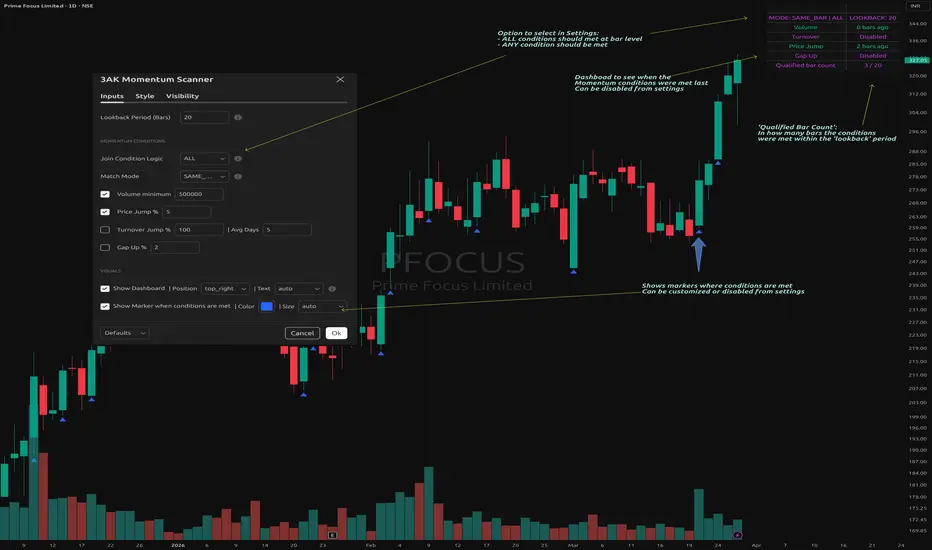
Figure 1: A momentum scanner in action, filtering the noise to find the top 1% of movers.
The "Fuel" for the Move: Low Float and High Volume
If you remember one thing from this article, remember this: Supply and Demand.
If a company has 1 billion shares (High Float), it takes a massive amount of money to move the price 10%. Think of trying to push a cruise ship with a paddle.
If a company has 5 million shares (Low Float), a small group of traders can send it to the moon in minutes. This is like a jet ski. One flick of the wrist and you're flying.
I look for "low float" stocks because they have the highest "volatility."
Volatility is just a fancy word for "it moves a lot." And we need movement to make money.
The Patterns: My Two Favorite Setups
I don't use 50 indicators. I don't use magic lines.
I use two simple patterns that have worked for decades.
1. The Bull Flag
This is the king of momentum patterns.
The stock spikes up (the pole). Then it moves sideways or slightly down on low volume (the flag).
Then, it breaks out above the flag on high volume.
That’s where you buy.
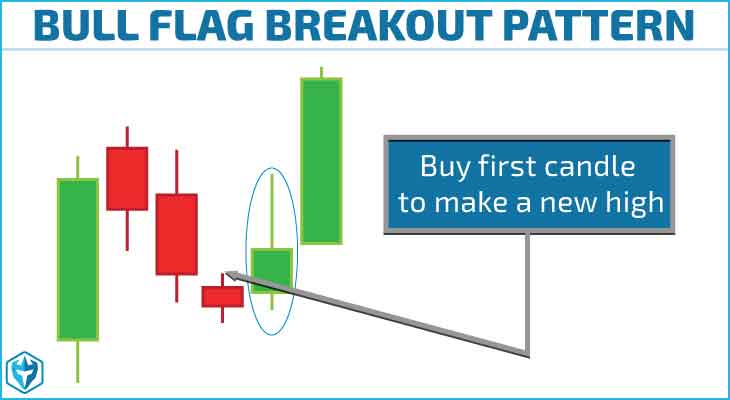
Figure 2: The classic Bull Flag. The "Pole" shows the initial surge, and the "Flag" shows the consolidation before the next leg up.
2. The Flat Top Breakout
This happens when a stock hits a specific price (like $5.00) and can't get past it.
It hits $5.00, drops. Hits $5.00, drops.
There is a "wall" of sellers there. But once the buyers eat through that wall, the stock explodes.
It’s like a dam breaking.
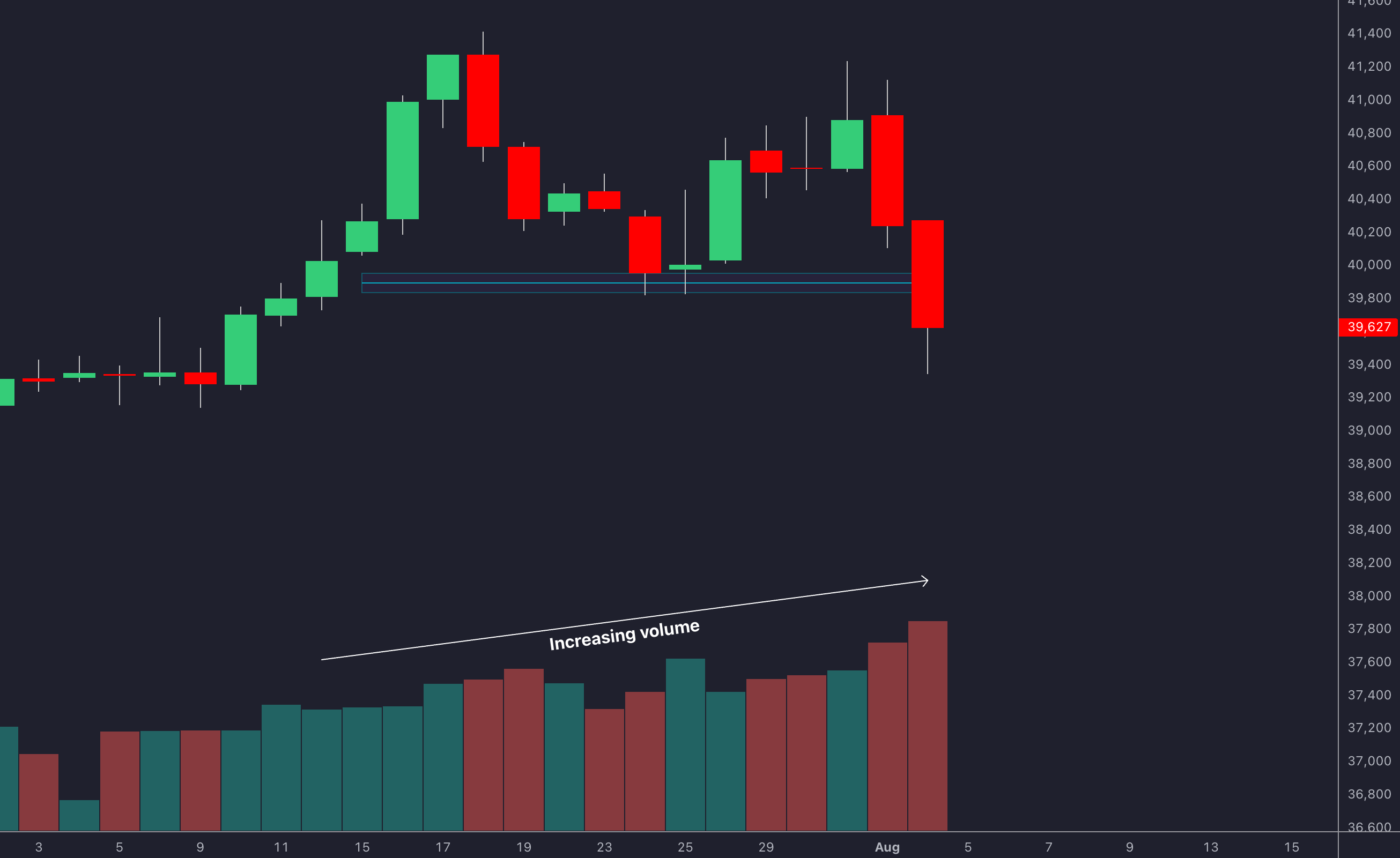
Figure 3: Volume confirming a breakout. Notice the spike in bars at the bottom when the price moves.
Risk Management: The Only Way to Survive
If you don't manage risk, you are a gambler. Period.
I use a 2:1 Reward-to-Risk ratio.
This means if I'm willing to lose $100 on a trade, I must have the potential to make $200.
If I win 50% of my trades, I am still making a lot of money.
• Entry: Just above the breakout point.
• Stop Loss: Just below the "pullback" or the low of the flag.
• Profit Target: Twice the distance of your stop loss.
Don't be a hero. If the stock hits your stop loss, get out.
The market doesn't care about your feelings. It doesn't know you exist.
The Best Time to Trade
I trade for 2 hours a day. That's it.
The best time is 9:30 AM to 11:30 AM EST.
This is when the most "dumb money" and "smart money" are fighting.
The volume is highest. The moves are cleanest.
After 11:30 AM, the market usually gets "choppy." It’s like a lake after a big boat passes—lots of small, annoying waves.
Go live your life. Don't stare at the screen all day.
The Psychology: Why Most People Fail
You can have the best strategy in the world and still lose.
Why? Because humans are emotional.
We hate losing. So we hold onto losing trades hoping they "come back." They usually don't.
We get scared when we're winning. So we sell too early and miss the big move.
To be a momentum trader, you have to be a robot.
You see the signal, you take the trade. You hit the stop, you get out.
No thinking. Just execution.
Real Example: Sharing Coffee with a Friend
Imagine we're sitting at a coffee shop. You ask me, "Alex, how did you find that stock that went up 30% today?"
I'd tell you I didn't "find" it. My scanner found it.
At 9:31 AM, a stock called $XYZ popped up on my list. It had a float of only 10 million shares.
It just announced it signed a huge contract with a government agency.
The volume was already 5x higher than normal.
I waited for the first "pullback." It formed a perfect Bull Flag.
I bought at $4.10 with a stop at $3.90. My risk was 20 cents.
Ten minutes later, it hit $4.50. I sold half. Then it hit $4.90 and I sold the rest.
I didn't guess. I followed the recipe.
The Tools of the Trade: Don't Cheap Out
If you're serious about this, you need the right tools.
You can't trade momentum on a free app that delays quotes by 15 minutes. By the time you see the move, it's over.
You need:
•A Direct Access Broker: This sends your orders directly to the exchange. It's fast.
•Real-Time Scanners: I use Trade Ideas or Scanz. They are expensive, but they pay for themselves.
•Charting Software: You need to see the "candlesticks" in real-time.
Think of it like being a carpenter. You can't build a house with a plastic hammer.
Scaling Up: From $100 to $10,000
The beauty of momentum trading is that it scales.
Once you prove you can make $10 with 100 shares, you can make $100 with 1,000 shares.
The strategy doesn't change. Only the zeros in your bank account change.
But don't rush it. Most people try to trade too big, too fast. They blow up their account before they even learn the rules.
Start small. Master the process. The money will follow.
FAQs: What Everyone Asks
Q: How much money do I need to start?A: You can start with a few thousand, but if you're in the US, you need to know about the Pattern Day Trader (PDT) rule. If you have less than $25,000, you are limited to 3 day trades every 5 days. You can use an offshore broker to bypass this, but that comes with its own risks.
Q: Which indicators are the best?A: Keep it simple. Use VWAP (Volume Weighted Average Price), a couple of Moving Averages (9 EMA and 20 EMA), and Relative Strength Index (RSI). Don't clutter your chart. If your screen looks like a flight simulator, you're doing it wrong.
Q: Can I do this on my phone?A: No. Don't be that guy. You need a fast computer, a stable internet connection, and professional software. Trading on your phone is like trying to win a Formula 1 race in a minivan.
Q: Is momentum trading better than value investing?A: It's different. Value investing is for building wealth over 20 years. Momentum trading is for generating cash flow today. You should probably do both. Use the money you make trading to buy long-term investments.
Q: What is the biggest mistake beginners make?A: Trading without a plan. They see a stock moving, they get FOMO (Fear Of Missing Out), and they jump in without knowing where they will get out. That's a recipe for disaster.
Summary Checklist for Success
If you want to master How Momentum Traders Find Stocks (Day Trading Strategy), follow this list:
1.Set up your scanners (Low float, high volume).
2.Wait for the open (9:30 AM).
3.Identify the catalyst (Why is it moving?).
4.Find the pattern (Bull Flag or Flat Top).
5.Calculate your risk (2:1 ratio).
6.Execute without emotion.
Trading isn't about being right. It's about being profitable.
Stop trying to be the smartest person in the room.
Just find the fastest horse and ride it.


No comments:
Post a Comment