How to start day trading with $100 is the question you’re asking because you want to get in the game, but you don’t want to go broke doing it.
You’re worried that $100 isn’t enough to make a dent, or worse, that you’ll lose it in five minutes.
I’ve been there, and I’m going to tell you exactly how to play this hand without the fluff.
The Brutal Reality of a $100 Account
Most people will tell you that you need $25,000 to day trade because of the Pattern Day Trader (PDT) rule.
They aren’t wrong, but they aren’t telling you the whole story either.
If you have $100, you aren’t "trading" in the traditional sense—you are practicing.
You are paying $100 for a front-row seat to the most expensive school in the world.
The goal isn't to turn $100 into $1,000,000 by next Tuesday.
The goal is to not let that $100 go to zero while you learn how the machine works.
If you can’t manage $100, you will definitely lose $100,000.
Pick Your Battlefield: Where Does $100 Actually Work?
You can't trade high-priced stocks like Tesla or Nvidia with $100.
One share costs more than your entire net worth in this account.
You have three real options:
•Penny Stocks: High volatility, low price, but very easy to lose everything.
•Options: You can buy "contracts" for cheap, but they expire, and time is your enemy.
•Crypto: Open 24/7, high leverage available, and you can buy fractions of a coin.
I prefer Crypto or low-cap stocks for a $100 start.
Why? Because the barriers to entry are low and the "units" are small enough to manage.
The "Singles and Doubles" Strategy
Everyone wants the home run.
They want the 1,000% gain in one hour.
That is how you go to zero.
If you want to survive, you need to aim for 1% to 2% gains.
On a $100 account, that is $1 or $2.
It feels pathetic. It feels like a waste of time.
But if you can do that consistently, you have a skill that scales.
The math of the game:
1.Find a setup that happens every day.
2.Wait for the market to come to you.
3.Take your $2 and walk away.
Risk Management: Your Only Real Job
Your job isn't to pick winners.
Your job is to manage losers.
If you lose $10 on a trade, you just lost 10% of your account.
You can only do that 10 times before you are out of the game.
You need to risk no more than $1 to $2 per trade.
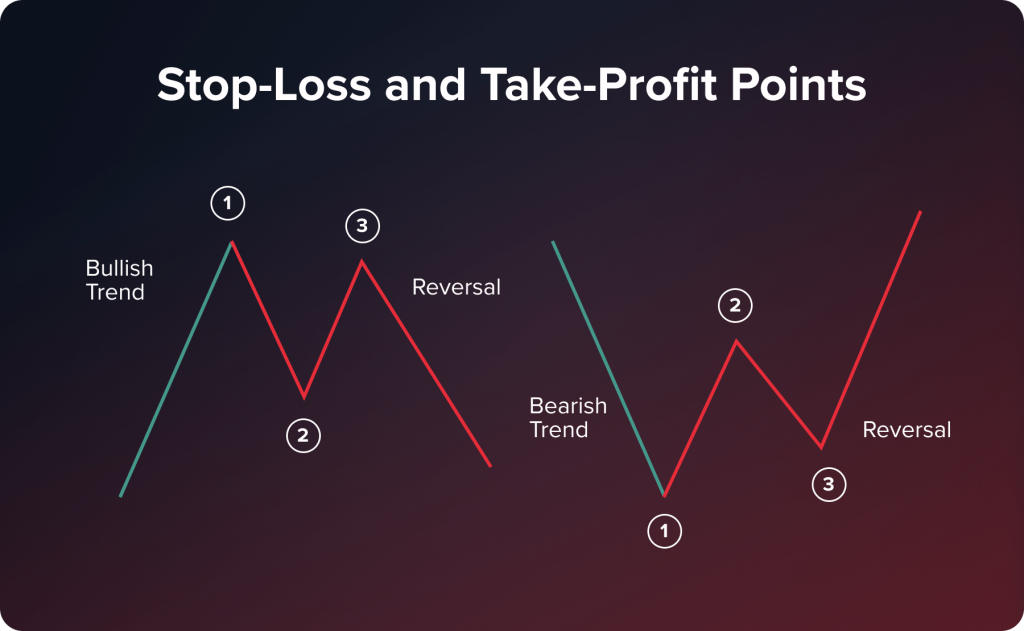
That means your "Stop Loss" has to be tight.
The Checklist for Your First Trade
Don't just click buttons because you feel lucky.
Luck is not a strategy.
Use this checklist before you put a single cent on the line:
•Is there volume? If nobody is buying, you can't sell.
•Is there a trend? Don't fight the ocean; swim with the current.
•Where is my exit? Know where you are getting out before you get in.
•Am I emotional? If your heart is racing, your position is too big.
Why Most People Fail (And You Won't)
People fail because they get bored.
They see $100 and think, "If I lose this, it's just a dinner out."
So they gamble. They take "lotto" trades.
They treat the market like a casino instead of a business.
If you treat your $100 account like a $100,000 business, you win.
You win because you develop the discipline that the "big guys" have.
You learn to sit on your hands when there is no setup.
You learn to take a loss and not "revenge trade" to get it back.
These are the Best Online Brokers to Start Trading
The Secret Sauce: Compounding Knowledge
The money you make on a $100 account doesn't matter.
The data you collect does.
Keep a journal of every single trade you take.
Write down why you entered, why you exited, and how you felt.
After 100 trades, you will see patterns.
You will see that you are good at one thing and terrible at another.
Stop doing the thing you are terrible at.
Do more of the thing you are good at.
That is how you build a career.
Final Thoughts on the $100 Start
Starting with $100 is the smartest move you can make.
It limits your downside while you figure out the upside.
Don't listen to the guys showing off Lambos on Instagram.
They probably started with their dad's money or got lucky once.
You are building a foundation.
You are becoming a person who can manage capital.
Once you prove you can grow $100 to $150, you can add more money.
But until then, keep it real, keep it small, and stay in the game.
That is how to start day trading with $100.
The Psychology of the Small Account
Let’s talk about the elephant in the room: your brain.
When you trade with $100, your brain tells you it doesn't matter.
It says, "It's just a hundred bucks, go big or go home."
This is the exact mindset that keeps people poor.
If you can't respect $100, you will never have $100,000 to respect.
The psychological hurdle isn't the money; it's the ego.
You want to tell your friends you made a killing.
You want to see big numbers on the screen.
But the market doesn't care about your ego or your dinner plans.
The market only cares about supply and demand.
If you can master your emotions on a $100 account, you've won 90% of the battle.
Most traders with millions in their accounts still struggle with the same fear and greed you feel right now.
Tools of the Trade: Keeping it Lean
You don't need a $5,000 Bloomberg Terminal.
You don't need six monitors and a gaming chair.
You need a laptop, a stable internet connection, and a clear head.
Use free tools like TradingView for your charts.
Use a broker with zero commissions because fees will kill a $100 account faster than a bad trade.
If you pay $5 in commission to buy and $5 to sell, you need a 10% gain just to break even.
That is a losing game.
Find a platform that lets you trade for free or for pennies.
In the beginning, your biggest expense should be your time, not your software.
The "One Trade a Day" Rule
When you have a small account, you have limited "bullets."
If you fire them all in the first five minutes of the market opening, you're done.
I recommend the "One Trade a Day" rule for beginners.
It forces you to wait for the absolute best setup.
It stops you from overtrading, which is the #1 killer of small accounts.
If you take one trade and win, you're done for the day.
If you take one trade and lose, you're done for the day.
This builds the "discipline muscle" that you'll need later.
It turns trading from a dopamine-chasing hobby into a boring, repeatable process.
And boring is where the money is.
Understanding Market Cycles
The market moves in waves.
It breathes in and it breathes out.
Most beginners try to trade when the market is "flat" or "choppy."
They get chopped to pieces because there is no clear direction.
You want to trade when the market is moving with purpose.
This usually happens in the first hour of the day or the last hour.
The rest of the time is mostly noise.
If you have $100, you can't afford to sit in noise.
You need to catch the wave, ride it for a few minutes, and get out.
The Importance of a Trading Journal
I mentioned this before, but I'm saying it again because you probably won't do it.
If you don't track your trades, you aren't trading; you're gambling.
A journal tells you the truth that your memory will try to hide.
Your memory will remember the big win and forget the five stupid losses.
Your journal will show you that you lose money every time you trade on a Friday afternoon.
It will show you that you're actually really good at trading breakouts but terrible at dip buying.
This information is worth more than the $100 in your account.
It is the map to your future wealth.
Scaling Up: When to Add More Capital
Don't add more money because you're "due for a win."
Don't add more money because you're frustrated with the small gains.
Only add more money when you have proven, with data, that you are a winning trader.
If you can turn $100 into $120 over a month of consistent trading, you have a "positive expectancy."
That means your system works.
Now you can add another $100 or $500.
The process stays exactly the same.
You are just moving the decimal point.
If you jump from $100 to $10,000 without the skills, you will just lose $10,000 faster.
Common Pitfalls to Avoid
•Following "Gurus": If they are selling a "secret system," the secret is that they make money from selling the system, not trading it.
•Revenge Trading: Trying to "get back" at the market after a loss. The market doesn't know you exist.
•Averaging Down: Adding more money to a losing trade. This is how small losses become account-killers.
•Ignoring the News: A single tweet can wipe out a technical setup in seconds.
Your First 30 Days
In your first 30 days, your goal is survival.
If you still have $100 at the end of the month, you are ahead of 90% of people.
Spend your time watching the charts, even when you aren't trading.
Learn how price reacts to certain levels.
Notice how volume precedes a big move.
This "screen time" is the only way to build intuition.
You can't buy it, and you can't skip it.
Conclusion: The Long Game
Trading is a marathon, not a sprint.
The people who try to sprint usually trip and fall in the first mile.
The people who walk consistently are the ones who finish.
Starting with $100 is your way of learning how to walk.
It's not glamorous. It won't make you famous.
But it will make you a trader.
And once you are a trader, the sky is the limit.
So take your $100, follow the rules, and stay humble.
The market is waiting.
How to start day trading with $100 is just the beginning of your story.
The Power of Fractional Shares
One thing that has changed the game for the $100 account is fractional shares.
Back in the day, if a stock was $200, you couldn't buy it.
Now, you can buy $5 worth of a $500 stock.
This means you can trade the "Blue Chips" even with a tiny account.
Why does this matter? Because Blue Chips are generally less "manipulated" than penny stocks.
They have more liquidity, which means your orders get filled at the price you want.
When you trade penny stocks with $100, you often get "slippage."
You try to sell at $1.00, but you get filled at $0.95.
On a small account, that 5% difference is huge.
Fractional shares let you practice on the same stocks the big hedge funds are trading.
It levels the playing field.
Building Your "Watchlist"
Don't try to watch the whole market.
It's like trying to watch every car on a highway at once.
Pick 3 to 5 assets and get to know them intimately.
Learn how they move at 9:30 AM versus 2:00 PM.
Learn how they react to earnings reports or economic data.
When you focus on a small watchlist, you start to see the "personality" of the stock.
You'll start to notice when something is "off."
That intuition is what separates the pros from the amateurs.
For a $100 account, I'd pick one major crypto (like Bitcoin), one tech stock, and one ETF.
Keep it simple. Keep it focused.
The "Tuition" Mindset
If you lose your $100, don't get depressed.
Think of it as a $100 course on "What Not to Do."
Most people spend $50,000 on a college degree and still don't know how to make money.
You just spent $100 to learn a high-income skill.
The key is to make sure you actually learned the lesson.
If you lost the money because you were gambling, you didn't learn anything.
If you lost the money because you followed your plan but the market changed, you learned a lot.
You learned that even a good plan can lose.
And that is one of the most important lessons in trading.
Why You Should Never Use Leverage (Yet)
When you have $100, the temptation to use 100x leverage is massive.
You think, "If I use leverage, my $100 acts like $10,000!"
Yes, and a 1% move against you acts like a 100% loss.
Leverage is a tool for people who already know how to win.
If you don't know how to win, leverage just helps you lose faster.
It's like giving a Ferrari to someone who hasn't passed their driving test.
Stay away from leverage until you have doubled your account without it.
By then, you'll realize you don't even need it as much as you thought.
The Community Trap
Be careful of "trading rooms" and Discord groups.
Most of them are just "echo chambers" where people lose money together.
They cheer each other on as they ride a losing trade to zero.
Trading is a solo sport.
You need to trust your own eyes and your own data.
If you're buying because some guy named "MoonShot99" told you to, you aren't a trader.
You're a follower. And followers usually get slaughtered.
Build your own system. Trust your own process.
Final Checklist for Success
Before you close this article and open your brokerage app, remember this:
•Patience: The market will be there tomorrow.
•Discipline: Follow the plan, even when it hurts.
•Humility: The market is always right. You are not.
•Consistency: Small wins add up to big wealth.
You have the roadmap. You have the $100.
Now, go out there and treat it like the million-dollar business it can become.
How to start day trading with $100 is the first step on a very long, very rewarding road.


No comments:
Post a Comment