Master the hanging man pattern, and you might just save yourself from buying at the exact wrong time.
Have you ever watched a stock climb for days, jumped in because you didn't want to miss out, and then watched it immediately tank?
Yeah, we've all been there.
It's frustrating, and it usually happens because we missed a subtle warning sign that the buyers were running out of gas.
That warning sign often looks like a tiny little candle with a really long tail.
Let's grab a coffee and break down exactly what this pattern is, why it tricks so many people, and how you can actually use it to protect your portfolio.
It is a bearish reversal pattern, just like the Evening Star formation.
What Exactly Is the Hanging Man Pattern?
Think of the hanging man pattern as the market's check engine light.
It shows up at the very top of an uptrend and warns you that the bullish momentum is fading fast.
Visually, it's pretty simple to spot once you know what you're looking for.
It has a small real body sitting right at the top of the trading range.
Below that body is a long lower shadow—or wick—that needs to be at least two to three times the length of the body itself.
There is usually little to no upper shadow.
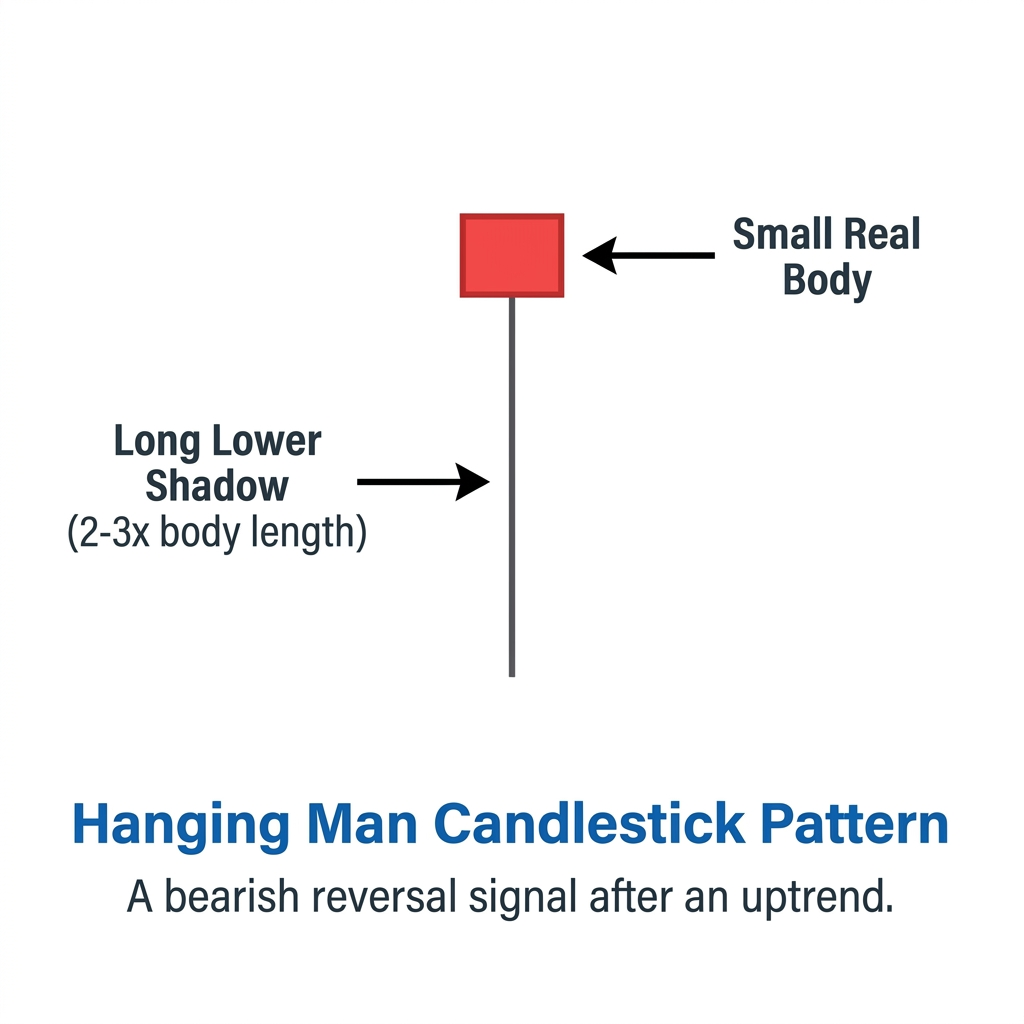
Here is what that shape is actually telling you about the psychology of the market.
When the market opened, sellers aggressively pushed the price down, creating that long lower wick.
Buyers eventually stepped back in and pushed the price back up near the open.
But the damage was done.
The fact that sellers were able to drive the price down so significantly shows that the "bid" sustaining the uptrend is starting to evaporate.
IF YOU WANT TO TAKE YOUR STOCK INVESTMENT TO THE NEXT LEVEL, READ MY CAPITALIST EXPLOITS REVIEW HERE
The Big Mix-Up: Hanging Man vs. Hammer
I see traders mess this up all the time.
They see that small body and long wick and immediately think, "Oh, a hammer! Time to buy!"
But context is everything in trading.
The Hammer: Appears at the bottom of a downtrend and signals a bullish reversal.
The Hanging Man: Appears at the top of an uptrend and signals a bearish reversal.
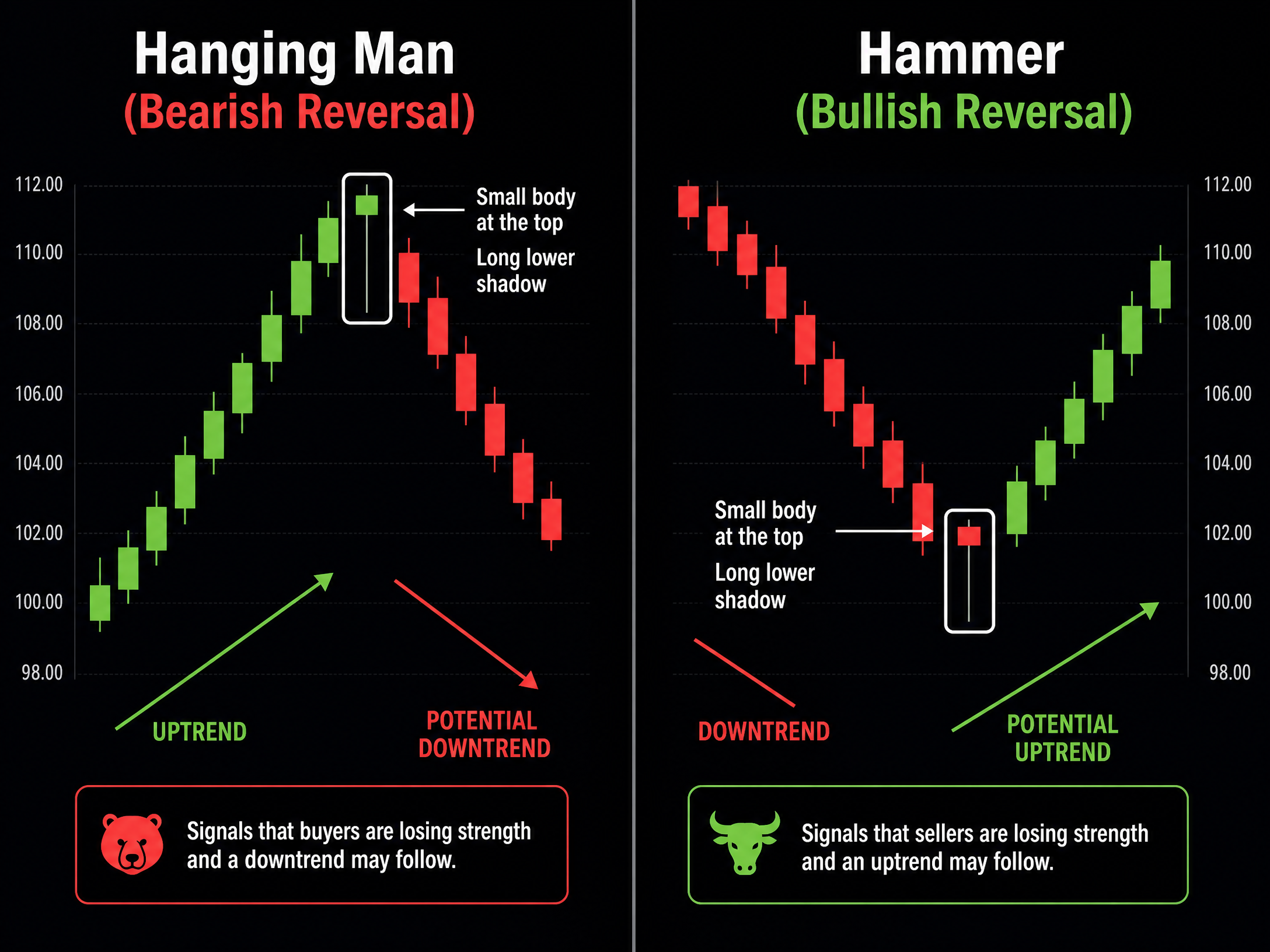
If you trade a hanging man like a hammer, you are buying right as the market is getting ready to sell off.
Always check the preceding trend before you make a move.
How to Trade the Hanging Man Like a Pro
You should never, ever short a stock just because you see a hanging man print on the chart.
In 2026, algorithmic trading is everywhere, and "liquidity hunts" will often push the price just above the hanging man to trigger stop losses before the real sell-off begins.
Always make sure to scan the best stocks to trade.
Trading this pattern in isolation only gives you about a 45% to 55% success rate, which is basically a coin flip.
To trade it safely, you need strict rules:
•Wait for Confirmation: You must wait for the next candle to close below the body of the hanging man.
•Check the Volume: You want to see a spike in volume on that confirmation candle, proving that institutional sellers are actually stepping in.
•Set a Tight Stop: Place your stop-loss just above the high of the hanging man candle.
•Look for Confluence: The signal is much stronger if it happens near a major resistance level or if your RSI is showing overbought conditions.
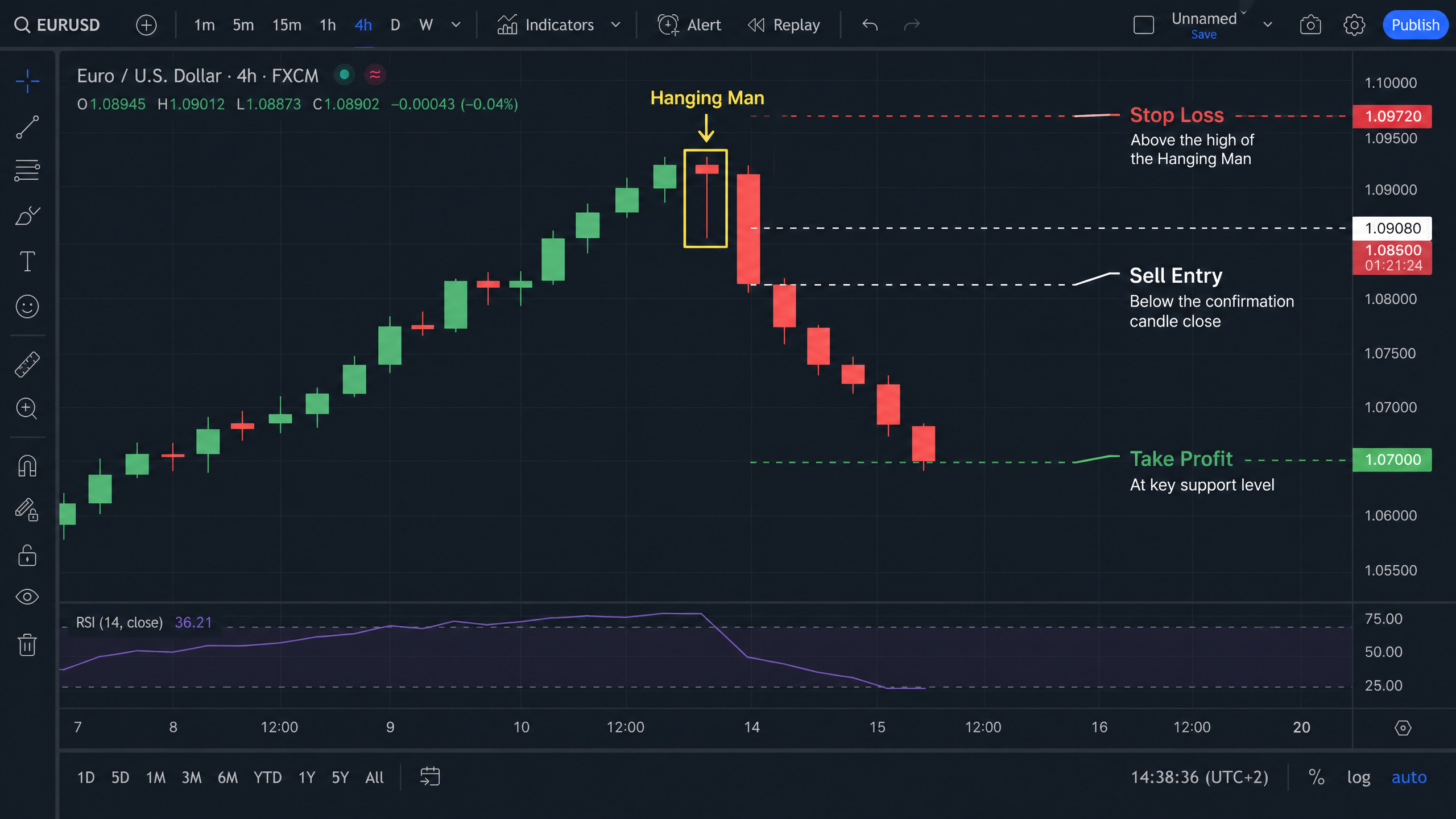
If the confirmation candle closes above the hanging man, the setup is dead.
Walk away and wait for the next opportunity.
You can check this trading patterns cheatsheet for more setups.
FAQs
Does the color of the hanging man matter?
Yes, it does. While the body can be green or red, a red (bearish) body is a stronger signal because it shows sellers were able to force the close below the open.
What timeframe is best for this pattern?
Daily and 4-hour charts are generally the most reliable. Intraday charts (like the 1-hour or 15-minute) produce a lot of false signals due to market noise.
Is the hanging man a guaranteed reversal?
Absolutely not. It is a warning sign, not a guarantee. Always wait for bearish confirmation before entering a trade.
Master the hanging man pattern, and you'll have a powerful tool to help you spot market tops before the crowd does.
This article is for educational purposes only and does not constitute financial advice.


No comments:
Post a Comment